
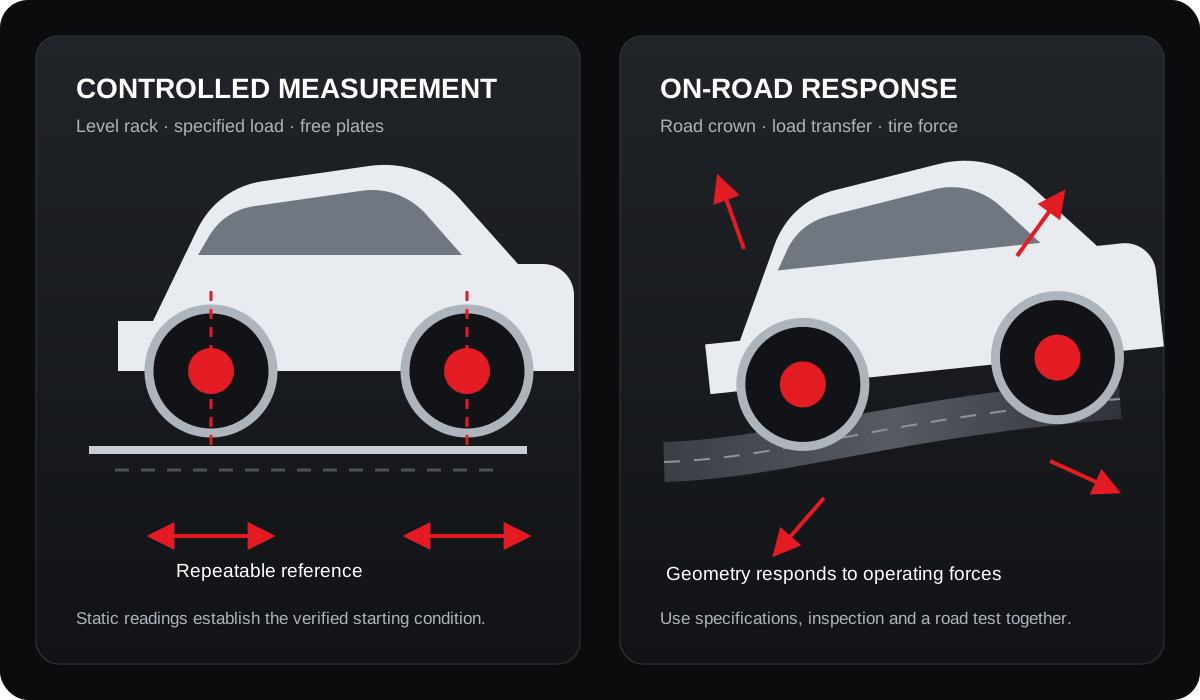
A wheel aligner measures geometry with the vehicle stationary in a controlled condition. Once the vehicle moves, suspension travel, bushing compliance, tire forces, braking, acceleration and the road surface can change the effective wheel direction. Static specifications provide a repeatable baseline; they do not replace inspection and a road test.
Why alignment starts with a static reference
Alignment readings are only meaningful when the measurement conditions are repeatable. The correct vehicle and specification must be selected, tires and suspension must support the vehicle normally, ride height and load must meet the service procedure, and the alignment surface and plates must allow the wheels to settle.
This controlled condition lets the technician compare actual geometry with the manufacturer’s target. Without it, a change in load, tire pressure, plate position or suspension height can be mistaken for an adjustment error.
What changes on the road
| Dynamic influence | Possible effect | What to evaluate |
|---|---|---|
| Vehicle load and ride height | Changes control-arm and steering-link angles, which can change camber and toe. | Specified load condition, spring condition, ride height and vehicle modifications. |
| Suspension travel | Wheel geometry follows the suspension curves through bump, rebound, roll and pitch. | Ride-height symmetry, damaged components and model-specific geometry. |
| Bushing and joint compliance | Braking, drive and cornering forces can move links and change effective toe or caster. | Bushings, ball joints, tie rods, subframe mounts and fastening. |
| Tire force and conicity | A tire can create lateral force even when alignment angles are within range. | Tire construction, pressure, wear, position and force-variation testing where available. |
| Road crown and surface | The vehicle may drift on one road and track straight on another. | Road-test direction, lane slope, wind and a suitable comparison route. |
| Braking or acceleration | Load transfer and compliance can expose a condition that is not obvious at rest. | Complaint conditions, brake drag, driveline influence and loose components. |
How specifications account for motion
Manufacturers publish static alignment targets for a defined condition because that is what can be measured repeatably in a workshop. The target is chosen with the suspension design, vehicle mass, tire system and expected operating behavior in mind.
This is why a generic instruction such as “set every front-wheel-drive vehicle to toe-out” is not reliable. Use the current model, market, suspension and ride-height specification. When a service procedure specifies ballast, fuel level, trim height or a special measurement position, those requirements are part of the specification—not optional preparation.
Connect the rack to the road
- Define when the complaint occurs: road speed, braking, acceleration, cornering, load or road type.
- Inspect tires, pressure, ride height, looseness, binding, damage and recent modifications.
- Measure in the exact preparation condition required by the vehicle procedure.
- Review all four wheels, including thrust angle, setback and side-to-side relationships.
- Correct verified mechanical and alignment conditions using approved procedures.
- Re-measure after settling the suspension and confirm steering-wheel position.
- Road-test on a suitable route and compare the result with the original complaint.
If static readings are correct but the symptom remains, do not force the settings outside specification to hide it. Investigate tires, compliance, ride-height change, braking or driveline influence, and dynamic steering behavior.
What a static measurement cannot prove
A normal alignment report cannot by itself prove that the vehicle has no bump steer, compliance steer, tire-force pull or intermittent component movement. It also cannot reproduce every load, road or braking condition.
Likewise, a pull on one crowned road does not prove that the alignment is wrong. The most reliable conclusion combines a repeatable measurement, physical inspection, current service information and a controlled road test.
Frequently asked questions
Why is ride height important before alignment?
Ride height positions the suspension links within their designed travel. A height change can alter camber, toe and caster relationships and can also indicate a spring, load or component problem.
Can alignment readings change when the vehicle is loaded?
Yes. The amount and direction depend on the suspension and steering geometry. Follow the specified loading procedure rather than applying a universal correction.
What is compliance steer?
Compliance steer is a change in wheel direction caused by force-related movement in bushings, joints, mounts or other elastic parts of the suspension and steering system.
Why can a vehicle still pull with readings in specification?
Tire lateral force, road crown, brake drag, ride-height differences, load, component movement or driveline effects can influence the vehicle even when static angles are acceptable.
TreadPlus technical learning reference · Published July 21, 2026. Always follow current vehicle specifications and approved repair procedures.